December 15, 2025
Why the Crab Rangoon Trend Is More Than a Viral Moment—and Why That Matters for Alaska Pollock
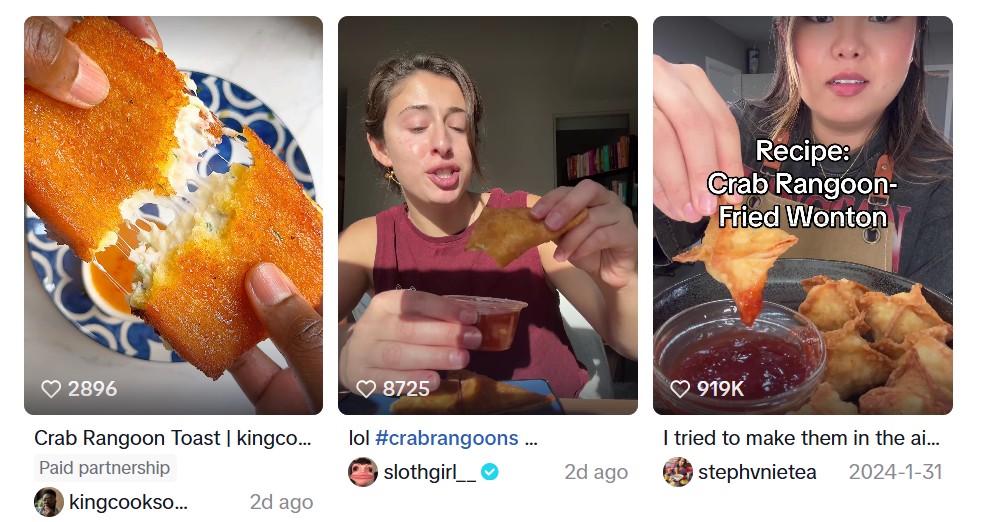
If you spend any time on TikTok or Instagram, you’ve likely encountered it: the unmistakable crunch of a golden-fried crab rangoon, the creamy filling pull, and the comforting nostalgia of a dish many of us grew up loving. What might look like just another viral food trend is actually something much more meaningful—especially for Wild Alaska Pollock, surimi seafood, and the U.S. fishing communities behind it.
A Familiar Favorite Finds New Life
Crab rangoon has experienced a major resurgence online since 2021–2022, driven by viral TikToks, ASMR-worthy crunch sounds, and creative new takes on a classic American-Chinese appetizer. From traditional wontons to crab rangoon toast, rolls, and holiday-ready party trays, creators have reimagined this familiar dish in ways that feel both nostalgic and new.
Part of the appeal is simple: crab rangoon is comfort food. It reminds people of takeout nights, family gatherings, and shared plates with friends. But what’s especially interesting is how people are making it today—and what they’re learning along the way.
Building Awareness of What Surimi Seafood Really Is
As home cooks and content creators recreate crab rangoon, many are using imitation crab—also known as surimi seafood—and talking openly about it. That matters.
Surimi seafood is made primarily from Wild Alaska Pollock, a mild, versatile, white fish that’s sustainably harvested in U.S. waters. For many consumers, this trend is prompting a closer look at what imitation crab actually is—not a mystery ingredient, but real seafood that’s been thoughtfully transformed to deliver flavor, texture, and versatility.
In comment sections and recipe captions, you’ll increasingly see questions and explanations like:
- “Did you know imitation crab is made from pollock?”
- “This is why it works in so many dishes.”
- “It’s affordable, easy, and great for entertaining.”
That kind of organic education is powerful. It helps demystify surimi seafood and positions it as an accessible, everyday option—not just something found in sushi rolls or seafood salads.
Versatility on Full Display
Crab rangoon’s viral moment has also showcased just how adaptable imitation crab can be. Creators are folding it into cream cheese fillings, baking it into pull-apart rolls, spreading it on toast, or using it as a base for fusion dishes. The same ingredient works for quick weeknight snacks, elevated appetizers, and crowd-pleasing party food.
This versatility is especially relevant as we head into the holidays—a time when people are looking for:
- Shareable dishes
- Affordable ingredients
- Easy prep with big payoff
- Foods that feel indulgent but approachable
Crab rangoon checks all those boxes, and in doing so, it puts surimi seafood—and Alaska pollock—top of mind at exactly the right moment.
Why This Matters for U.S. Fishermen and Coastal Communities
Behind every viral bite is a supply chain rooted in real people and places.
Wild Alaska Pollock supports one of the largest and most well-managed fisheries in the world, providing jobs for thousands of U.S. fishermen, processors, and coastal communities—particularly in Alaska. When consumers rediscover pollock-based foods like surimi seafood, it helps strengthen demand for responsibly harvested, domestically sourced seafood.
That demand matters. A strong U.S. commercial fishing industry:
- Supports working waterfronts
- Sustains rural and coastal economies
- Invests in science-based fisheries management
- Delivers high-quality protein to consumers at home and abroad
Trends like crab rangoon may start on social media, but their ripple effects extend far beyond the screen.
A Timely Reminder of Seafood’s Role at the Table
At its core, the crab rangoon trend reminds us that seafood doesn’t have to be complicated to be meaningful. It can be fun, nostalgic, creative, and deeply shareable—especially during moments when people come together around food.
As consumers rediscover imitation crab through this trend, they’re also rediscovering Wild Alaska Pollock: a sustainable, versatile fish that plays a quiet but essential role in American food culture.
Sometimes awareness doesn’t come from a lecture—it comes from a crunchy bite, a familiar flavor, and a dish worth sharing.

